
x
C
U
S
T
O
M
S
(P
R
E
V)
P
A
T
N
A
C
O
M
M
I
S
S
I
O
N
E
R
A
T
E

Patna Customs (Preventive) Commissionerate : Tourist Locations
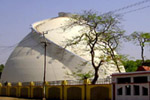 Golghar |
the British army in 1786. The massive structure is 29 m high and the walls are 3.6 m wide at the base. The winding stairway around this monument offers a brilliant panoramic view of the city and the Ganga flowing by. | |||
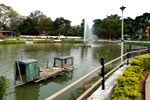 Eco Park (Rajdhani Vatika) |
Eco Park or Rajdhani Vatika is a beautiful park situated in the very center of the city. It is situated in Punaichak area amid the hustle-bustle of the government offices. The park is maintained by the Department of Environment and Forest, Government of Bihar. | |||
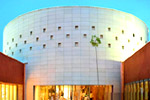 Bihar Museum |
Bihar Museum situated on a 13.5 acre plot on Bailey Road in Patna. The total built-up area is 24,000 square metres and the total gallery spaces add up to an area of 9500 square metre. For this project, Maki and Associates of Japan teamed up with OPOLIS Architects of Mumbai, India. Life is all about experience. Every second, in fact every nano-second, we are continuously experiencing. Even if we are not consciously thinking about it, we can feel, smell, touch, hear and see. How beautiful it is, this capacity to experience! It is what mothers teach their children and how teachers shape their students. I was built by my architects fundamentally for all visitors to experience history. You will enter the magical worlds of kings, poets, saints and countrymen, the history of times gone and many transformations. | |||
 Buddha Smriti Park |
Buddha Smriti Park also known as Buddha Memorial Park (as translated in english) is an urban park located on Frazer Road near Patna Junction in Patna, India. This park has been developed by the Bihar Government to commemorate the 2554th birth anniversary of the Buddha. This park was inaugurated by the 14th Dalai Lama. | |||
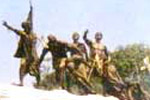 Martyr's Memorial |
A memorial to seven freedom fighters who sacrificed their lives in the Quit India Movement of August 1942, the Martyr's Memorial is a modern sculpture facing the Secretariat, where they were shot in their attempt to host the national flag. | |||
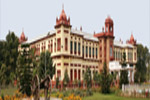 Patna Museum |
The Patna Museum houses a First World War cannon, metal and stone sculptures of the Mauryan and Gupta periods, Buddhist sculptures and quaint terracotta figures. A 16 m long fossilised tree is one of its special features. | |||
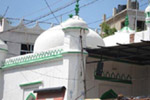 Pathar ki Masjid |
Adjacent to Har Mandir Sahib, on the bank of the Ganga, is this beautiful mosque built by Parwez Shah, son of Jehangir, when he was the governor of Bihar. It is also called Saif Khan's mosque, Chimmi Ghat mosque and Sangi Masjid. | |||
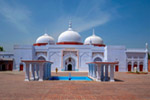 Sher Shah Suri Masjid |
Sher Shah Suri built this mosque in 1545 to commemorate his reign. Built in the Afghan architectural style, it is one of the many beautiful mosques in Bihar, and one of the impressive landmarks of Patna. | |||
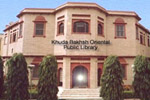 Khuda Baksh Oriental Library |
Founded in 1900, a magnificent one man collection of rare Arabic and Persian manuscripts, Rajput and Mughal paintings, oddities like the Koran inscribed in a book only 25mm wide and an assortment of old and new books from the University of Cordoba, Spain. It is one of the national libraries in India. The library also contains the only books to survive the sacking of the Moorish University of Cordoba in Spain. | |||
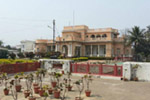 Jalan Museum |
Built on the foundations of Sher Shah's fort, Qila House contains an impressive private collection of antiques, including a dinner service that once belonged to George III, Marie Antoinette's Sevres porcelain, Napoleon's four-poster bed, Chinese jade and Mughal silver filigree,.It is a private collection, and prior permission is required for a visit. | |||
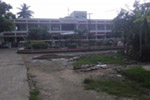 Sadaqat Ashram |
The Ashram is the headquarters of Bihar Vidyapeeth, a national university. India's first president, Dr. Rajendra Prasad lived here after his retirement and there is a small museum here showcasing his personal belongings. | |||
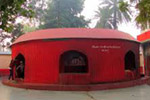 Agam Kuan |
Agam Kuan (Unfathomable well) is one of the most important early historic archeological remains in Patna. It is situated just close to Gulzarbagh railway Station, which is proposed to be associated with the Mauryan Emperor Ashok. | |||
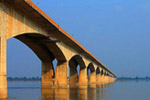 Gandhi Setu |
One of Asia's longest roadway bridge. | |||
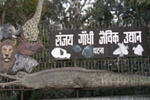 Biological Park (Patna Zoo) |
Patna Zoo was established as a Botanical Garden vide Government of Bihar, Forest Department's letter no. 1781V dated 13.4.1970 on a chunk of 34.00 acres land being part of the Governor’s campus. His Excellency the then Governor of Bihar, Shri Nityanand Kanoongo bestowed the land to the forest department to establish the garden. The Divisional Forest Officer, Gaya Forest Division was deputed as officer-in-charge of the Garden. Later on, in 1972 the name was changed to Biological Park by the Department of Forests, Govt. of Bihar, and, it was brought under the administrative control of the Working Plan Officer, Magadh Circle, Patna. Later on the adjoining 58.20 acres land of Revenue Department and 60.75 acres land of Public Works Department transferred to Forest Department was added to the existing Biological Park. Thus, present area of the Biological Park is approximately 153 acres. The land acquired from Public Works Department and Revenue Department is notified as Protected Forest by the State Government. The State Government has declared the park/zoo service as ‘Essential Sevice’ under the Bihar Essential Services Maintenance Act. | |||
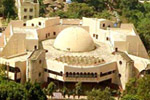 Modern Planetarium |
Indira Gandhi Science Complex, is one of the must visiting places in Patna. This is among few Planetarium's (Taramandal) in India | |||
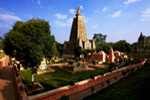
Mahabodhi Temple |
The temple stands in the east to the Bodhi Tree. Its architectural effect is superb. Its basement is 48 square feet and it rises in the form of a slender Pyramid till it reaches its neck, which is cylindrical in shape. The total height of the temple is 170 ft. and on the top of the temple are Chatras which symbolize sovereignty of religion. Four towers on its corners rise gracefully giving the holy structure a poise balance. This sacred edifice is like a grand banner unfurled by time to proclaim to the world the pious efforts of the Buddha to solve the knots of human miseries, to ascend above worldly problems and to attain transcendental peace through wisdom, good conduct and disciplined life. Inside the temple, in the main sanctum, there is a colossal image of the Buddha in sitting posture touching the earth by his right hand. In this posture the Buddha accomplished the supreme enlightenment. The statue is of black stone but it has been guilder by the devotees. The entire courtyard of the temple is studded with large number of votive stupas. These stupas are of all sizes built during the past 2500 years ago. Most of them are extremely elegant in structural beauty. The ancient railings, which surround the temple, are of the first century BC and are among the very interesting monuments of the century. |
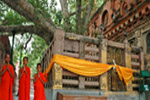
Animesh Lochan Chaitya |
It is believed that the Buddha spent one week here looking towards the great Bodhi tree out of gratitude, without twinkling his eyes. |
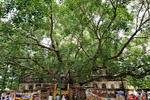
Bodhi Tree |
The present Bodhi Tree is probably the fifth succession of the original tree under which the Buddha had attained enlightenment. Vajrasana, the seat of stability, is a stone platform on which the Buddha is supposed to have sat in meditation gazing east, under the Bodhi tree. |
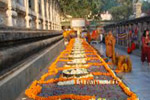
Chankramana |
This marks the sacred spot of the Buddha's meditative perambulations during the third week after pious enlightenment. It is believed that wherever the Buddha put his feet lotus sprang up. |
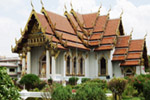
Ratnagarh |
The Buddha spent one week here, where it is believed that five colors came out of his body. |
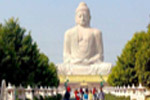
Other Treasures of Bodhgaya |
80 ft Statue of the Buddha, Lotus Tank, Buddha Kund, Rajayatana, Brahm Yoni, Chinese Temple & Monastery, Burmese Temple, Buddhist Monastery of Bhutan, International Buddhist House & Japanese Temple, Thai Temple & Monastery, Tibetan Monastery, Archaeological Museum. Sujata village (2 kms), Dungeshwari Hill (Prag bodhi) (22 kms by road), Maitraya Project (3 kms). |
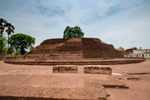
Sujata Kutir |
This is the place near the river where Lord Buddha was offered kheer by the girl, Sujata, after he had realised the extreme asceticism. |
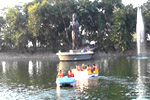
Pandu Pokhar |
Breathtaking landscapes and fun-filled activities makes PANDU POKHAR – a paradise for all. From beautiful gardens to an open air theatre, to a pond overlooking 37 feet tall bronze statue of King Pandu to a herbal maze – we are a place to enjoy and admire nature. A park with a unique combination of entertainment and camping makes it a wonderful place for corporate events, school excursions, family and other social gatherings. Truly, a beautiful destination for a perfect vacation. Experience the goodness of nature with fun. Starting with adventurous Zipline and Zorbing, the park is filled with fun rides, games and pleasure gardens. At dusk, the display of colourful fountains in the pond enhances the beauty of the park. Evening walks in the serenity of the park allows nature’s peace to flow in, soothing the soul and mind. |
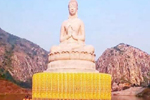
Ghorakatora Lake |
GhoraKatora Lake is a beautiful serene spot in Rajgir. According to Hindu mythology, king Jarasandha from Indian epic Mahabharata had his stable here, hence the name GhoraKatora. Thelake offers boating as a merriment to the visitors. There is a glorious sandstone Statue of Buddha in the middle of the lake on a lotus pedestal. |
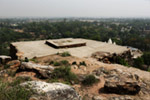
Jarashand ka Akhara |
This is the Ranbhumi where Bhima and Jarasandh fought one of the Mahabharat battles. |
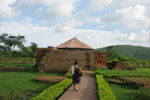
Jivakameavan Gardens |
Seat of the Royal Physician's dispensary where Lord Buddha was once brought to have wound dressed by Jivaka, the royal physician during the reign of Ajatshatru and Bimbisara. |
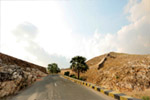
Cyclopean Wall |
Once 40 Km long, it encircled ancient Rajgir. Built of massive undressed stone carefully fitted together, the wall is one of the few important Pre-Maurayan stone structures ever to have been found. Traces of wall still subsist, particularly at the exit of Rajgir . |
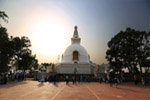
Shanti Stupa |
The Vishwa Shanti Stup is located on a 400 meter high hill. The stupa is built in marble and on the four corners of the stupa are four glimmering statues of Buddha. This place is also called the GriddhKoot.To reach the top of this hill one has to come through the “Ropeways”. |
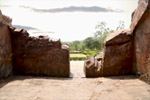
Sonbhandar Caves |
Two rather strange cave chambers were hollowed out of a single massive rock. One of the chambers I believed to have been the guard room, the rear wall has two straight vertical lines and one horizontal line cut into the rock; the doorway is supposed to lead to king Bimbisara Treasury. Inscriptions in the Sankhlipi or shell script, etched into wall and so far undeciphered, are believed to give the clue to open the doorway. The treasure, according to folklore, is still intact. The second chambers bears a few traces of seated and standing etched into the outer wall. |
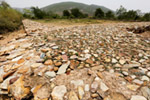
Bimbisar jail |
His impatient saon and heir, Ajatashatru, imprisoned King Bimbisara here. The captive king chose this site for his incarceration, for, from this spot he could see Lord Buddha climbing up to his mountain retreat atop the Griddhakuta hill. There is a clear view of the Japanese Pagoda. The stupa of peace was built on the top of the hill. |
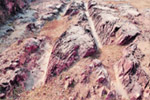
Chariot Route Marks |
The Chariot Route and hell inscriptions are worth a visit for the strangeness of the phenomenon, two parallel furrows cut deep into rock for about thirty feet giving credence to the local belief that they were "burnt" into the rock by the speed and power of Lord Krishna's chariot when he entered the city of Rajgir during the epic Mahabharata times. Several shell inscriptions, the undeciphered characters current in central and eastern India from the 1st to 5th centuries AD, and engraved in the rock around the chariot marks. |
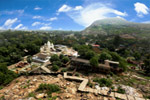
Hot Springs |
At the foot of Vaibhava Hill, a staircase leads up to the various temples. Separate bathing places have been organized for men and women and the water comes through spouts from Saptdhara, the seven streams, believed to find their source behind the "Saptarni Caves", up in the hills. The hottest of the springs is the Brahmakund with a temperature of 45 degree Centigrade. |
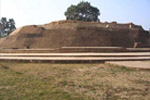
Pippala cave |
Above the hot springs on the Vaibhava Hill, is a rectangular stone sculpted by the forces of nature which appears to have been used as a watch tower. Since it later became the resort of pious hermits, it is also called Pippala Cave and popularly known as "Jarasandh ki Baithak" after the name of the King Jarasandh, a contemporary of Lord Krishna described in the epic Mahabharata. |
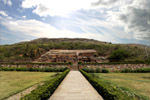
Swarn Bhandar |
It is to be said that that it was a store of Gold of King Jarashandh. A unread story about the cave is that there is a lot of gold in this cave and a script is written on a stone is the code to unlock the door of this Swarn Bhandar. |
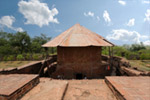
Maniyar Math |
Maniyar Math occupies a prominent position inside the valley of Rajgir. Situated almost in the centre of the enclosure of the inner city on the way to the Sone Bhandar caves, there is this cylindrical well-like structure of archaeological importance. It is situated 1km from the Warm Water Spring. This well is covered by a small temple of the Jains. It is not dedicated to a Jain Tirthankara but to Naga Salibhadra who is said amongst the Jains buried his treasure inside the well. Jains offer their worship at this place to the presiding deity. |
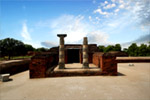
Nalanda University Ruins Archaeological Complex |
The total area of the excavation is about 14 hectares. All the edifices are of the red brick and the gardens are beautiful. The buildings are divided by a central walk way that goes south to north. The monasteries or "Viharas" are east of this central alley and the temple or "Chaiyas" to the west. The Vihara-1 is perhaps the most interesting with its cells on two floors built around Nalanda University Ruinsa central courtyard where steps lead up to what must have been a dais for the professors to address their students. A small chapel still retains a half broken statue of the Lord Buddha. |
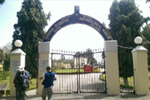
Nalanda Archaeological Museum |
Opposite the entrance to the ruins of the university and houses, there is a small but beautiful collection of Buddhist and Hindu bronzes and a number of undamaged statues of the Lord Buddha that were found in the area. Two enormous terra-cotta jars of the first century stand intact behind the museum in a shaded enclosure. The collection includes copper plates and stone inscriptions, coins, pottery and samples of burnt rice (12th century AD) found among the ruins here. |
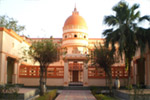
Nava Nalanda Mahavihara |
Nava Nalanda Mahavihara is devoted to study and research of Pali Literature and Buddhism. This is a new institute, where students from foreign countries also study. |
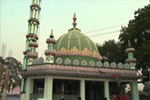
Bari Dargah |
This is headquarters of Nalanda district that lays 30 kms South of Bakhtiarpur on NH-31. This is also a railhead on the Bakhtiarpur Rajgir branch line of the Eastern Indian Railway. This town is known as Bihar Sharif, owing to its many Muslim tombs that still retain traces of its former importance as a Muslim pilgrimage. There is a hill called Pir Pahari, about 1 m to the northwest of the town. At its summit is the dargah or mausoleum of the Saint Mallik Ibrahim Bayu, round which are tem smaller tombs. It is a brick structure surmounted by a dome and bears inscriptions showing that the saint died in 1353. Another great dargah is that of Mokhdum Shah Sharif ud-din, also called Makhdum-ul-Mulk, died here in 1379; the inscription over the entrance shows that his tomb was built in 1569. This tomb, which stands on the south bank of the river, is held in great veneration by the local Mohammedans, who assemble here on the 5th day of Sawan to celebrate the anniversary of his death. The Chhoti Dargah is the shrine of Badruddin Badr-I-Alam, famous saint who died here in 1440. |
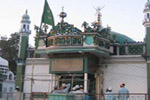
Chhoti Dargah |
Dargah of Makhdum Hazrat Sultan Ahmed Charampose, Bihar Sharif (Nalanda). The biggest and the oldest building of Mohalla-Amber in the Bihar Sharif Town (Nalanda), is Tomb of Hazarat Makhdum Sultan Saiyad Shah Ahmed Charampose Teg Barhana Rohmatulla Alaib. He was born in the year 1236 and passed away in 1335 (according to Islamic calendar 657-776 Hizri). He is ranked to a very high order among other Sufi saints and Auliahs. Thousands and thousand of people participate in the ‘Urs’ celebrated here in memory of the Saint every year. |
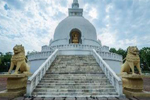
Vaishali Shanti Stupa |
Vaishali is where Buddha preached his last sermon before his Nirvana. Vishwa Shanti Stupa (World Peace Pagoda) built by the Nipponzan Myohoji sect of Japan is an important monument in Vaishali where a small part of the Buddhas relics found in Vaishali have been ensrined. |
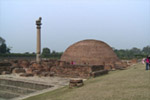
Ashokan Pillar |
Emperor Ashoka built The Lion Pillar at Kolhua. It is made of a highly polished single piece of red sandstone, surmounted by a bell shaped capital, 18.3 m high. A life-size figure of a lion is placed on top of the pillar. There is a small tank here known as Ramkund. This pillar beside a brick stupa at Kolhua commemorates Buddha's last sermon. |
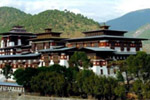
Bawan Pokhar Temple |
An old temple built in the Pala period stands on the northern bank of Bawan Pokhar and enshrines beautiful images of several Hindu gods. |
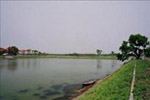
Abhiskek Pushkarn (Coronation tank) |
It contains water that was believed to be sacred in the old days. All of Vaishali's elected representative were anointed here before their swearing in. The Lichchavi stupa was located near here. |
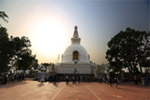
Shanti Stupa |
The Vishwa Shanti Stup is located on a 400 meter high hill. The stupa is built in marble and on the four corners of the stupa are four glimmering statues of Buddha. To reach the top of this hill one has to come through the “Ropeways”. This place is also called the GriddhKoot. Aerial Ropeway ticket cost is 60/- RS per Head. |
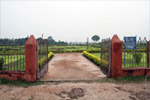
Raja Vishal ka Garh |
A huge mound with a circumference about one Kilometer and walls nearly 2 m high with a 43m wide moat around them, is said to be the ancient parliament house. Over seven thousand representatives of the federal assembly gathered here to legislate and discuss the problems of the day. |
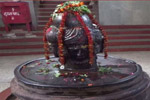
Chaumukhi Mahadev |
Chaumukhi Mahadev, or Chaturmukhi Mahadev, is a historic Hindu temple located approximately 2 kilometres (1.2 mi) east of Vaishali Gadh, Bihar, India. The Temple has Shivling with four god faces, Brahma, Vishnu, Mahesh and Surya. While the construction time is unknown, it is believed to have been built during the fifth century. |
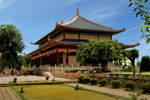 Pawapuri |
Pawapuri, or Apapuri, 38 kilometers from Rajgir and 101 kilometers from Patna, all sins end for a devout Jain. Lord Mahavira, the final Tirthankar and founder of Jainism, breathed his last at this place, and was cremated here around 500 B.C. It is said that the demand for his ashes was so great that a large amount of soil was removed from around the funeral pyre, creating the water tank. A marble temple, the “Jalmandir”, was later built in the middle of the tank, and is now a major pilgrimage spot for Jains. Another Jain temple called Samosharan is located here. |
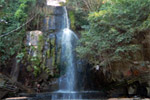 Kakolat Waterfall |
From the Kakolat Hills and also from an altitude of 160 feet, one can witness the falling of the Kakolat Falls. The hills are encircled by lush green forests. The people dwelling here and in nearby places and also the tourists come here for picnics. As per the myth, during their banishment, the Pandavas came here to visit the falls. The bottom of the falls contains a natural basin or lake. This place hosts a large fair during the festival of Chhath or Baisakhi Shankranti. |